Blog Details
- Home
- Blog Details


Omkara Infra is committed to creating a residential experience that features sustainable living. Omkara Infra works with a team of talented creative engineers to deliver the finest features without sacrificing luxury or style.
Get every updates

Buying an apartment is a major financial commitment. Before paying a booking amount or signing a sale agreement, you should verify the builder's legal documents, land ownership, building approvals and financial terms. Collecting and checking the right documents helps you understand what you are buying, identify potential legal or financial risks and make a more informed property investment.
This apartment document checklist explains which papers to collect from a builder, why each matters and how to verify them before purchasing a flat.
Property documents establish whether the builder has the legal right to develop and sell the apartment and whether the proposed construction complies with applicable regulations. They also help you understand the property's ownership history, approved layout, payment obligations and possession conditions.
For a homebuyer, document verification can help prevent disputes involving unclear land titles, unauthorized construction, delayed possession and unexpected financial liabilities.
The following documents are important when purchasing an apartment in India. The exact requirements depend on the project's location, construction stage and applicable state regulations.
Ask for the title deed and relevant ownership records establishing the builder's or landowner's legal interest in the property.
> The name of the registered landowner.
> The property's survey number and land description.
> The chain of ownership and previous transfers.
> Any restrictions, disputes or competing claims.
If the developer is building under a joint development agreement (JDA), ask for the registered JDA and the landowner's authorization to develop and sell the relevant units.
An Encumbrance Certificate provides information about registered transactions and certain recorded liabilities affecting a property during the specified period.
Request an EC covering an appropriate ownership period and have a property lawyer review it. Remember that an EC does not establish the absence of every possible dispute, unregistered claim or legal restriction.
For projects covered by the Real Estate (Regulation and Development) Act, 2016, verify the project's registration with the relevant state RERA authority.
Check the registration number, promoter details, approved project information, declared completion timeline and available disclosures.
For a project in Hyderabad, consult Telangana RERA; for a project in Kolkata, consult West Bengal's applicable RERA authority. Confirm whether the project qualifies for any statutory exemption rather than assuming every development requires registration.
Request the sanctioned building plan and applicable layout approval from the competent local authority.
Compare the approved plans with the apartment being offered. Check the floor, unit number, carpet area, balconies, common areas, parking arrangements and permitted building configuration.
Unauthorized deviations can create complications involving occupancy approval, utilities, resale and financing. This is particularly important when comparing an Apartment for sale with the specifications advertised by the builder.
Where applicable, obtain the commencement certificate or equivalent permission allowing construction to begin.
Check whether the approval covers the relevant building, phase and construction activity. Additional environmental, fire-safety, airport or other clearances may be required depending on the project's characteristics and location.
The allotment letter records the apartment offered to you and its initial commercial terms. The agreement for sale sets out the legally relevant obligations of the buyer and promoter.
Review:
> Apartment identification and carpet area.
> Total consideration and payment schedule.
> Taxes, maintenance and other charges.
> Possession date and delay provisions.
> Cancellation, refund and dispute-resolution terms.
Do not rely solely on brochures or verbal promises when the signed documents contain different terms.
These documents help you assess the apartment's financial obligations and whether the property can satisfy a lender's legal and technical checks.
| Document | Why it Matters |
| Bank or lender NOC | Helps establish whether an existing mortgage or charge has been addressed. |
| Property tax receipts | Help check applicable property-tax payments and outstanding dues. |
| Approved project cost and payment schedule | Clarifies instalments and the timing of payments. |
| Home loan project approvals | May help with a lender's initial project assessment, but do not replace your own checks. |
| Draft conveyance or sale deed | Explains the transfer of ownership and the property being conveyed |
A bank's approval of a project or apartment can be useful, but it is not a substitute for independent legal verification. Lenders have their own eligibility requirements and may request additional documents.
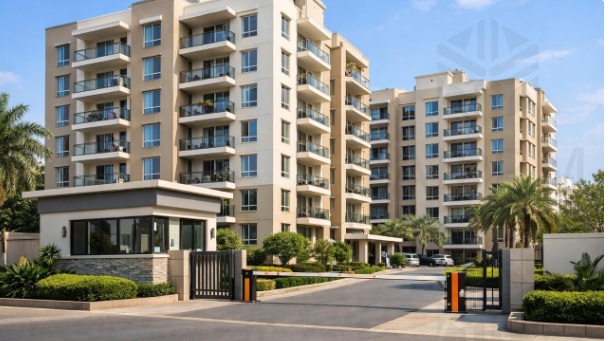
For a completed apartment, request the relevant completion certificate and occupancy certificate (OC), where applicable.
> Completion certificate: Confirms that construction has been completed in accordance with the applicable approved plans and requirements.
> Occupancy certificate: Relates to the building's suitability for occupation and applicable civic infrastructure.
> Possession letter: Records the handover of the apartment and its possession date.
> Final payment statement: Shows the amounts paid, outstanding amounts and any adjustments.
> Maintenance and handover documents: Include applicable warranties, utility information, keys, equipment details and common-area arrangements.
For example, Hyderabad homebuyers can check the applicable occupancy certificate process with HMDA or the relevant local authority.
Use this practical verification process before making a substantial payment.
Request the title records, approvals, RERA details, agreement draft and applicable financial disclosures.
Verify project registration, sanctioned plans and available land or registration records with the relevant authorities.
Ask for a title search, review of encumbrances, development rights and the agreement's legal provisions.
Confirm that the unit number, floor, carpet area, project phase and parking terms match across the documents.
Calculate the total purchase cost, including applicable taxes, registration, stamp duty, maintenance deposits and other disclosed charges.
Official RERA disclosures and local authority records can help you cross-check the builder's documents. Keep copies of the documents you receive and written responses to any unresolved questions.
Avoid these common homebuyer mistakes:
> Paying a large booking amount before reviewing essential legal documents.
> Assuming a RERA registration number means every aspect of a property is risk-free.
> Confusing a carpet area with a super built-up area.
> Relying on a brochure instead of the sanctioned plan and signed agreement.
> Ignoring the project's mortgage, litigation disclosures or outstanding dues.
> Accepting possession without checking the required occupancy documents.
If the builder cannot provide an important document, ask why, when it will be available and whether the missing approval affects your purchase decision.
Choosing an apartment involves more than comparing prices, layouts and amenities. Buyers should also understand the property's documentation, construction approvals, payment structure and possession commitments.
At Omkara Infra & Developers prospective homebuyers can use the project information and available documentation to understand the residential purchase process. Before proceeding, buyers should independently verify the relevant records and consult a qualified legal professional for property-specific advice.
1. What are the most important documents to check before buying a flat?
The essential documents include the title deed, encumbrance certificate, applicable RERA registration, sanctioned building plan, commencement permissions and agreement for sale. Completed apartments also require relevant completion and occupancy documents.
2. Is a RERA certificate mandatory for every apartment project?
No. RERA registration applies to projects covered by the Act, subject to statutory conditions and exemptions. Verify the project's registration requirements with the relevant state authority.
3. Can I buy an apartment without an occupancy certificate?
The legal and practical implications depend on the project's status and applicable local requirements. For a completed building, verify the required occupancy approval before accepting possession.
4. Should I hire a lawyer before buying an apartment?
Yes. An independent property lawyer can examine ownership records, encumbrances, development rights, approvals and the sale agreement to identify legal issues that may not be obvious to a buyer.
5. Does bank approval guarantee that a property has a clear title?
No. Bank approval reflects the lender's assessment under its own procedures. Buyers should obtain independent legal verification rather than relying exclusively on a bank's approval.
6. What should I check before paying the final apartment instalment?
Verify the payment statement, applicable approvals, possession conditions, agreed apartment specifications, outstanding charges and required handover documents. Confirm that the contractual conditions for the payment have been met.
Collecting and verifying builder documents is an essential part of financially responsible apartment buying. Start with land ownership, legal development rights, project approvals and the sale agreement. Then check the financial terms and, where applicable, the completion and occupancy documents before taking possession.
A careful document review, supported by independent legal advice, can help you understand your obligations and make a more informed homebuying decision.



No comments yet. Be the first to comment.